
Ask five people at a construction or manufacturing company what your WIP schedule actually says about the business, and you'll probably get five different answers.
That's the problem. Not that nobody's tracking it. It's that WIP accounting has quietly become the report everyone glances at and nobody fully trusts.
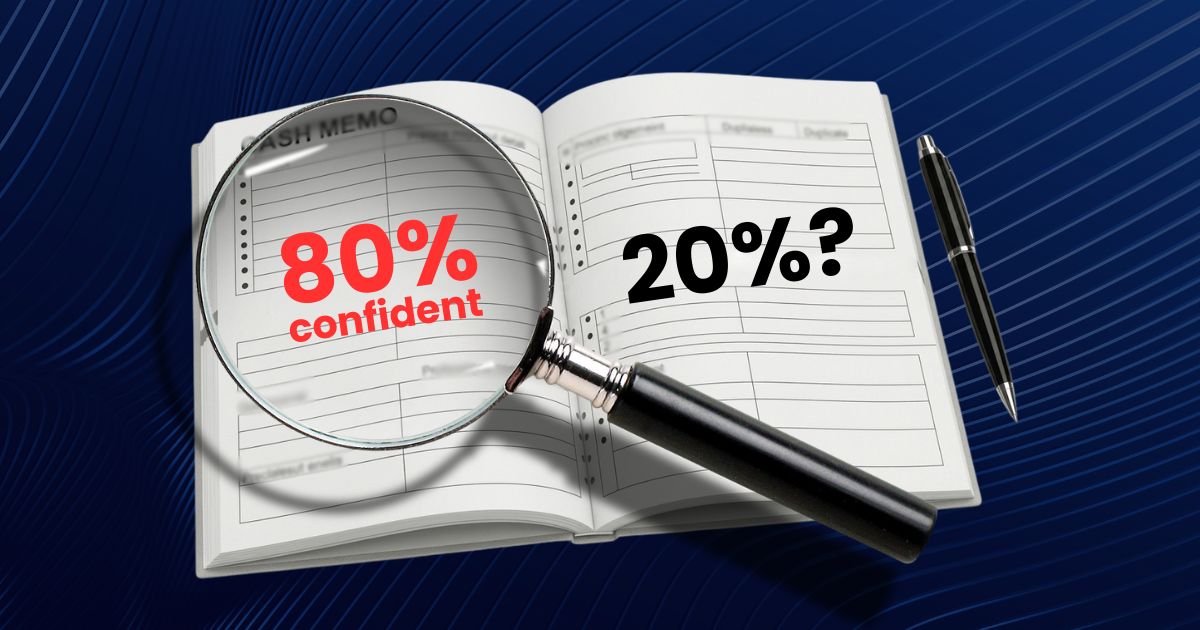
If you're a CFO in construction or manufacturing, you already know the feeling. Month end rolls around, the WIP schedule gets pulled together (usually from three different spreadsheets and a few side conversations with project managers), and you sign off on numbers you're maybe 80 percent confident in.
That last 20 percent is where the real risk lives.
Here's what WIP accounting actually is, why it trips up even well-run finance teams, and how to build a process you can stand behind without crossing your fingers.
What WIP Accounting Actually Means
WIP stands for work in progress. WIP accounting is the method used to recognize revenue and cost on jobs that are still underway, rather than waiting until a project wraps to book everything at once.
For companies running long, multi-month projects, whether that's a construction job or a manufacturing run, this matters enormously. Without it, your income statement would swing wildly depending on which jobs happened to finish in a given month.
Instead of that boom and bust picture, WIP tracking spreads revenue and cost recognition across the life of the project based on progress. The most common approach is the percentage of completion method, which ties revenue recognized to how much of the job is actually done.
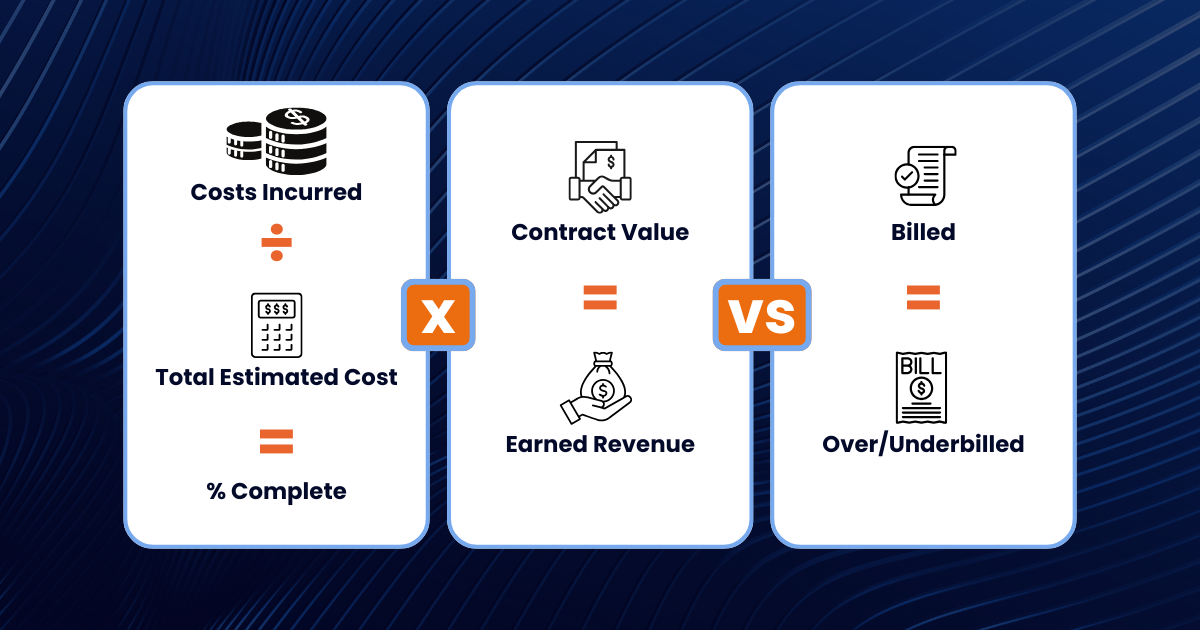
The core formula looks like this. Costs incurred to date, divided by total estimated cost, gives you the percentage complete. Multiply that by total contract value, and you get earned revenue. Compare that to what's actually been billed, and you find out whether you're overbilled or underbilled on a given job.
Simple in theory. Messier in practice, because it depends on getting estimated cost to complete right, and that number moves constantly.
Why WIP Tracking Breaks Down
Most WIP problems aren't math problems. They're process problems.
The biggest one? Estimates that don't get updated. A project manager sets an estimated cost to complete early in the job, and it quietly goes stale while conditions on the ground change. Nobody circles back to revise it until finance notices the numbers look off.
Then there's the disconnect between field and finance. Job costs get entered into one system, billing happens in another, and WIP gets calculated in a spreadsheet that's stitched together from both. Every handoff is a chance for something to slip through.
And maybe the most dangerous pattern: WIP that only gets reconciled once a month, right before the schedule is due. By then, you're not managing the business. You're doing archaeology on it.
The result of all this shows up as overbilling or underbilling that nobody caught early. Overbilling means you've recognized more revenue than the work supports, which can mask a problem until it's a much bigger one. Underbilling ties up cash you've already earned but haven't billed for. Either way, by the time it surfaces in the WIP schedule, it's already affected decisions that were made on incomplete information.
What This Costs You (Beyond the Obvious)
The direct cost is time. Hours spent reconciling, chasing down PMs for updated estimates, rebuilding spreadsheets every month. But the bigger cost is what happens when WIP inaccuracy meets a lender or a bonding company.
Sureties and banks look at WIP schedules closely, because they're one of the clearest signals of whether a contractor's financial reporting can be trusted. A WIP schedule that's inconsistent from month to month, or that requires a big correcting entry at year end, raises questions. Not necessarily about the business itself, but about whether finance actually has a handle on the numbers in real time.
That's a harder conversation to have with a bonding agent than almost any other kind of finance conversation, because it touches your capacity to take on new work. If your WIP schedule doesn't inspire confidence, your bonding capacity may not reflect what your business is actually capable of. And that means leaving work on the table, not because you can't do it, but because you can't prove you can manage it financially.
A Few Things to Watch For
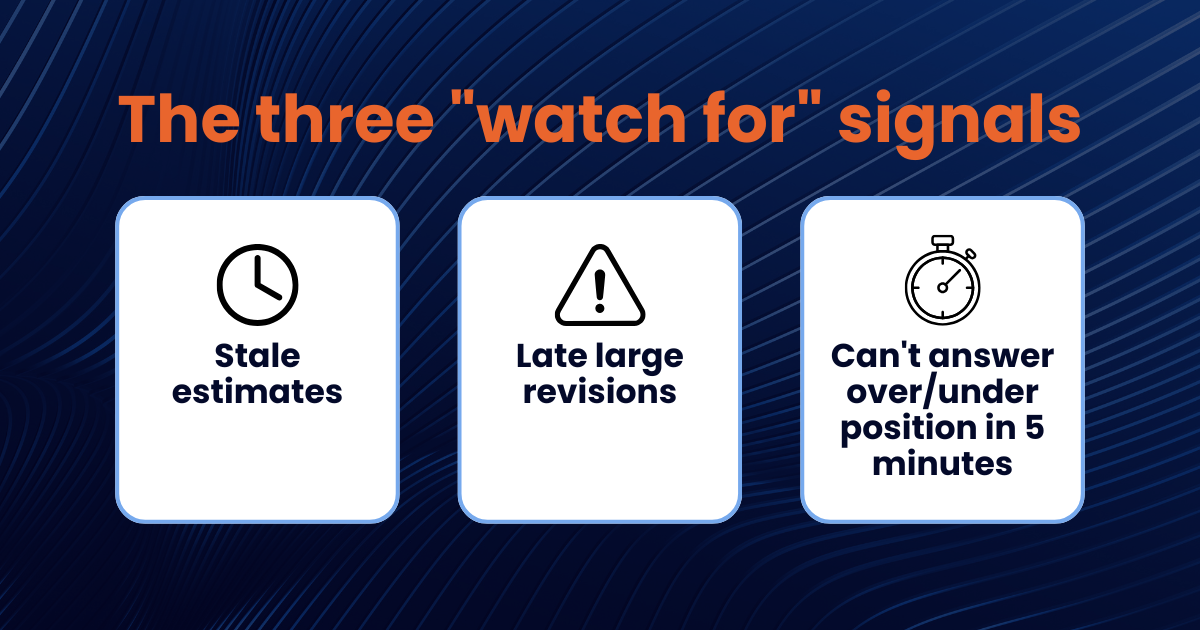
If you want an early read on whether your WIP process has a problem, a few signals tend to show up before the year-end audit does.
One is WIP numbers that haven't been touched by anyone outside accounting in weeks. If project managers aren't weighing in on estimated cost to complete regularly, the schedule is running on outdated assumptions.
Another is a pattern of large, late revisions to estimate to complete right before a job wraps. That usually means the estimate was never really tracked along the way. It was set once and left alone.
And the third is simply not knowing, without pulling a report and waiting on someone, what your current over or under billing position looks like across active jobs. If that answer takes more than a few minutes to get, the process is doing more manual lifting than it should be.
Building a Process You Can Actually Trust
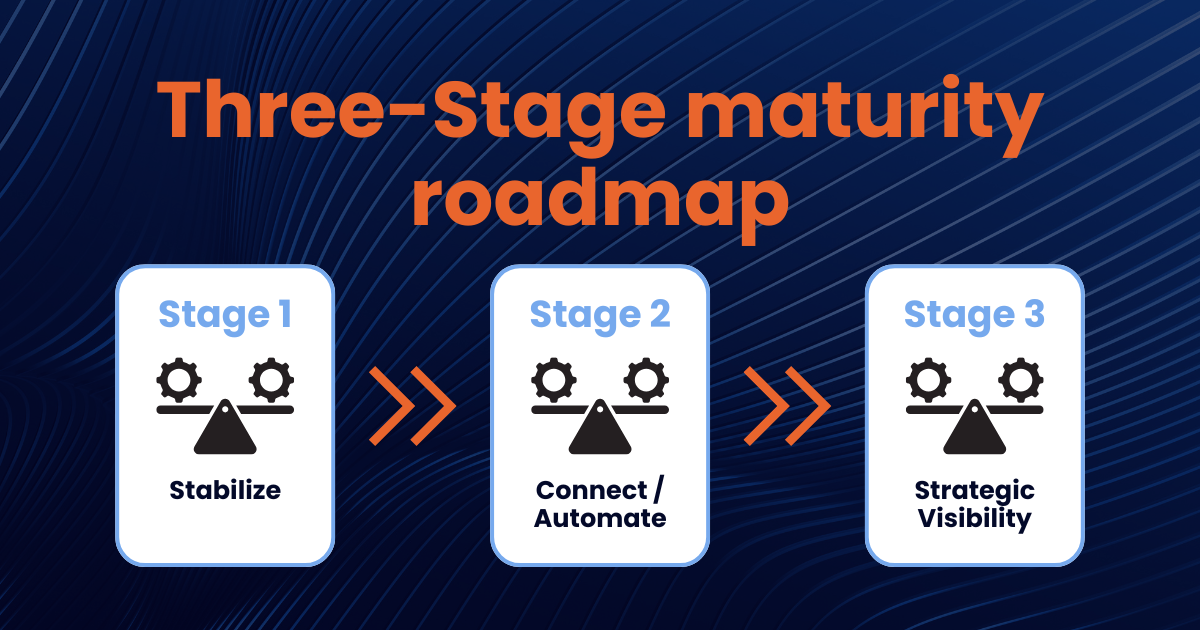
None of this gets fixed by working harder on the same spreadsheet. It gets fixed by changing how WIP data flows through the business, and that tends to happen in stages rather than all at once.
The first stage is stabilizing what you have. That means getting WIP schedules centralized instead of scattered, and making sure job cost and billing data are actually talking to each other instead of living in separate silos. It also means establishing a rhythm for estimate updates. If project managers aren't reviewing estimated cost to complete at least monthly on every active job, the WIP schedule is running on stale assumptions no matter how good your spreadsheet is.
The next stage is connecting WIP to the rest of your financial system. This is where WIP calculations get automated and tied directly into your job costing and billing data inside your ERP, rather than recalculated by hand every month. When a cost posts to a job, the WIP schedule reflects it automatically. When a change order is approved, the estimated total updates without someone remembering to go adjust a spreadsheet. Estimated cost to complete becomes a routine part of project management, not a fire drill before the schedule is due.
The final stage is using that visibility strategically. Once you trust the numbers in real time, WIP stops being a compliance exercise and starts informing decisions about bonding capacity, growth planning, and where to bid next. You can see which jobs are trending over budget before they get there. You can walk into a surety meeting with a WIP schedule you're 100 percent confident in. And you can make growth decisions based on actual financial position rather than best guesses.
That sequence matters more than any single tool or feature. Jumping straight to automation without fixing the underlying process just automates the confusion faster.
A Quick Gut Check
Before you close this out, it's worth asking a simple question.
If someone asked you right now what your current over or under billing position looks like across active jobs, could you answer in under five minutes, with confidence?
If yes, you're in solid shape.
If not, that's not a personal failing. It's usually a sign the process, not the people, needs attention.
Where to Go From Here
If reading through this raised a few uncomfortable "hmm, that sounds familiar" moments, you're not alone. Most finance teams in construction and manufacturing are running WIP on some version of the patchwork process described above. It works, until it doesn't.
The fastest way to know where you actually stand is to see your own WIP process laid out against what a stable, well-run process looks like. That's exactly what a Catalyst360 Discovery Session is built for. It's not a sales pitch. It's a straightforward way to see where the gaps are before they show up in a bonding conversation you didn't see coming.
Schedule Your Discovery Session →
See how Acumatica handles construction and project accounting →
Frequently Asked Questions
What's the difference between WIP accounting and regular job costing? Job costing tracks what a project actually costs. WIP accounting takes that cost data a step further, using it to determine how much revenue should be recognized at a given point in a project that isn't finished yet. Job costing tells you what you've spent. WIP accounting tells you whether the revenue you've recognized matches the work you've actually completed.
How often should WIP schedules be updated? Monthly at minimum, though many finance teams find that reconciling more frequently, especially on larger or longer jobs, catches problems before they compound into a big correcting entry later. The real key is making sure estimated cost to complete gets refreshed by project managers on the same cadence, not just the financial calculations.
What causes overbilling and underbilling? Both usually trace back to a mismatch between what's been billed and what the percentage of completion calculation says has actually been earned. The most common root cause is estimated cost to complete that hasn't been updated recently. If your estimate says a job is 60% done but the billing says 80%, you're overbilled. If it's the other way around, you're underbilled. Neither is necessarily a crisis on its own, but patterns of either one signal a process that isn't keeping up with reality.
SUBMIT YOUR COMMENT